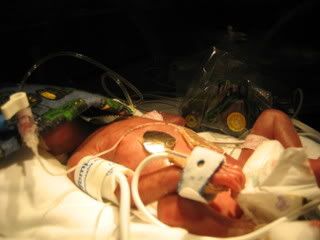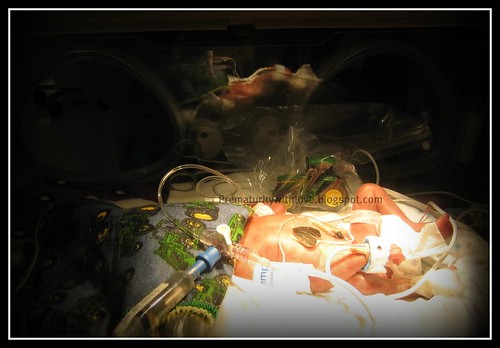
According to the March of Dime 534,000 babies are born premature in the United States each year. Babies born under 35 weeks gestation are considered premature. While the " preemie club" from a medical perspective include larger gestation preemies there seems to be a " sub" club. One that not many are a part of. Each year only 50,000 micro-preemies are born in the United States. A micro-preemie is generally considered to be born under 3 pounds and before 29 weeks gestation.
The later gestation preemies are at risk for delays and other "preemie" issues and it is a good idea as the parent of these later gestation preemies to be aware and be proactive in their development.
Sometimes, the members of the micro preemie club can be pretty harsh and not welcoming to the older gestation preemies. ( I know I am guilty) because as a 5 pound preemie and a 1 pound preemie the issues are far more extreme. Meaning the chance of something being "wrong" is less likely and the chances of US having delays is much greater, the ride of prematurity longer and the effects more lasting we tend to have bitter pants!
Long term preemie issues can be tough and it can also be a lonely place. One of the reasons is because those with Micro preemies do get grouped into the later group and everyone asks "well they are fine now right?" question. Well maybe at 34 weeks our kiddos are good to go and "catch up by 2" but at 25 weeks there are RARELY a preemie that has no lingering effects.
If you are in the Micro preemie club the dreaded words is brain bleed. Dreaded, because no one wants to know that inside their growing babies brain is a bleed, a bleed that causes damage. That bleed will leave your child with an uncertain future.
Brain bleeds are the largest cause for brain damage in a child. It is also the reason behind MANY Cerebral palsy diagnosis. For us, that brain bleed has left us with LOTS of days and weeks and months of an uncertain future.
Tyler was diagnosed at 24 hours old with a grade 3 and 4 IVH. I am not certain on the grade at the very start but the end result was a very very bad hemorrhage. Grade 1 and 2 leave usually no lasting effects and if they are lasting they are very minimal. But grade 3 and 4 touch brain tissues and leave a damaging hole in its path.
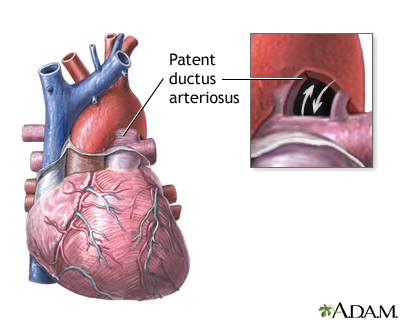
His heart defect known as a Patent ductus arteriosis needed to be closed to help regulate the blood pressure in his body. The lower the blood pressure the less pressure on his already damaged brain.
At a small 1 pound 11 ounces and just a few days old Tyler underwent heart surgery. It was a surgery to place a titanium clasp on his defect to help close it off. The surgery was done at his bedside. By the time I walked back to our room and had a little breakfast Dallas was already back telling me that they were done and Tyler did pretty well.
His bleed would be the cause of many heartaches and sadness in the coming years but it would pose many health risks as well. His bleed was the result of his hydrocephalus. Having hydrocephalus and draining out fluid in the NICU was the cause of his Craniosynostosis and now at 4 his hard time walking and cerebral palsy and lack of speech is a direct result from that faithful day we were told he had a brain bleed.
One thing we do know is that we are one of the lucky ones where we did get to see our child walk. While getting all of the information we could in the NICU we were told of the possibility that Tyler would be in a wheelchair. While this is still a possibility ( he doesn't have the greatest ability to be stable all lone or without assistance) it hasn't been the case for Tyler yet. He is doing things that most kids with this degree of damage.
We are very proud of him. "Most" Days he works really hard at therapy. He is wonderful at being a kid. He is generally happy, loving and I love him SO much.